

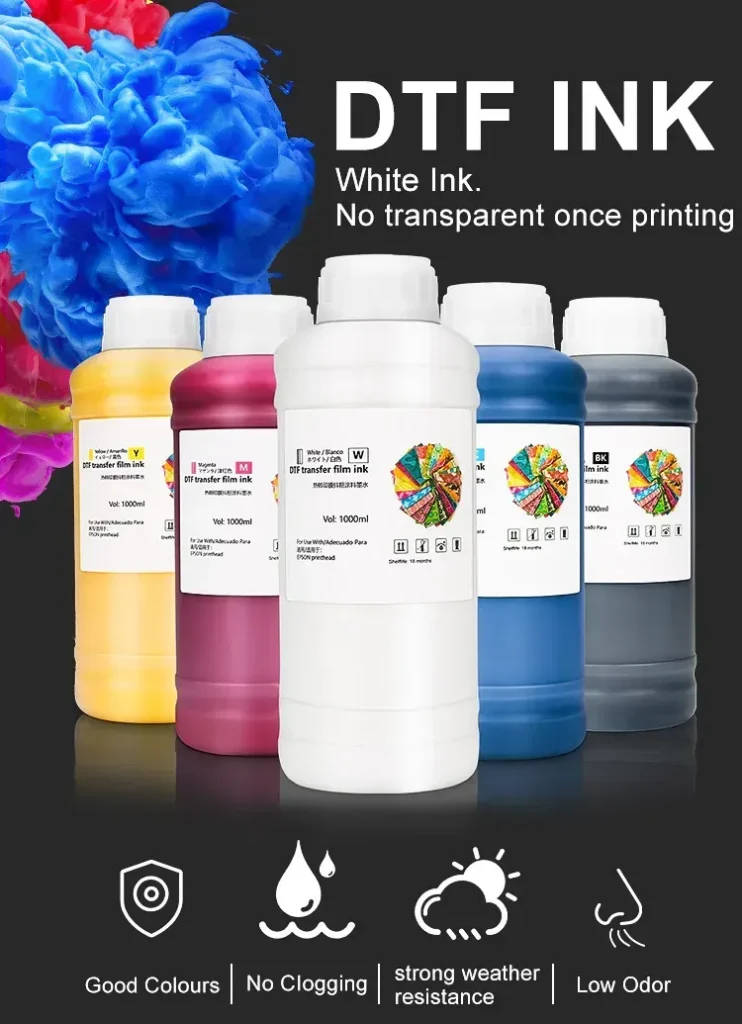
DTF film and inks are the foundation of consistent, high-quality textile reproductions. Choosing the right DTF film quality and inks combination helps maximize color vibrancy, wash fastness, and softness across garments, bags, and promotional items. This guide breaks down how to optimize DTF transfer settings, assess film and ink compatibility, and test results before scaling production. We also cover best practices for DTF printing on textiles, from pre-treatment considerations to post-press care, so your colors stay vivid wash after wash. By focusing on DTF film quality, ink performance, and DTF film and ink compatibility, you’ll predict outcomes more reliably and reduce costly reprints.
In broader terms, this topic covers the transfer film system and pigment inks used in fabric printing. The discussion spans substrate compatibility, coating uniformity, and curing dynamics that govern durability and color fidelity. It also translates into practical guidance on substrate pre-treatment, adhesive backings, and post-press soft hand feel. By framing the concepts with related terms such as printable carrier, pigment dispersion, and heat-curing profiles, readers can connect the technology to real-world results. This latent semantic indexing–driven approach helps you compare materials and processes without relying on brand names alone.
Understanding DTF Film Quality: How Film Characteristics Drive Print Outcomes
DTF film quality is a composite of thickness, coating uniformity, release properties, and adhesive back layer. The film’s thickness—typically 75 to 150 microns—directly influences color depth and adhesion, with thicker films delivering deeper tones on dark fabrics but potentially requiring higher press temperatures and longer dwell times. A smooth, uniform coating helps ink uptake and reduces white edge halos, while consistent release properties ensure clean separation from the powder during curing.
A practical approach is to run small batch tests across common substrates—cotton, poly blends, and polyesters—to observe how the film performs with your ink system and heat-press cycle. Film quality is not just surface appearance; it interacts with your chosen inks, the printer’s output, and the press cycle, all of which affect color vibrancy, edge sharpness, and wash durability. Documenting results allows you to predict outcomes on future jobs and scale production with less risk of surprises.
Choosing the Best DTF Inks for Color Performance and Durability
The best DTF inks deliver stable color across lighting conditions and maintain opacity on dark fabrics. Pigment-based inks with high pigment load typically yield richer color, better coverage for white underbases, and improved skin-tone reproduction. When evaluating inks, look for a wide color gamut, strong opacity on dark substrates, and documented cure temperatures compatible with your chosen film.
Drying time and cure behavior influence throughput and print quality. Inks should cure uniformly under your dryer to avoid smudging or ghosting, and they should hold up to washing without excessive cracking. Also consider ink–film compatibility and how well the printed image holds up across light and dark fabrics. If you’re starting from scratch, print color swatches on multiple fabrics to gauge skin tones, gradients, and solid blocks.
DTF Film and Inks: Compatibility and Selection for Reliable Prints
DTF film and ink compatibility goes beyond brand names. Cross-brand testing helps reveal how different film coatings interact with your chosen inks, powder adhesion, and curing steps. When evaluating compatibility, pay attention to how the white underbase behaves on dark fabrics and whether density settings produce opaque coverage without halos. A robust test matrix helps you avoid surprises in production.
Document results from each test run and adjust your selection criteria accordingly. Keep notes on wash stability, color consistency after multiple cycles, and any ghosting or edge issues. This systematic approach makes it easier to select a reliable combination of film and ink for long-running jobs.
Optimizing DTF Transfer Settings for Consistent Results
DTF transfer settings are the practical knobs that turn film and ink into consistent results. Start with manufacturer-recommended temperature ranges and times, then fine-tune in small increments based on observed outcomes. Temperature influences adhesion and curing; time affects color density and texture; pressure should be even to prevent ink squeeze and edge blurring.
After the transfer, implement post-press handling to avoid smudges and heat marks. Document your SOPs for pre-press checks, powder handling (if used), heat-press sequence, and cooling. Consistent transfer settings across similar jobs reduce variability and improve repeatability in color and texture.
Texture, Softness, and Handling: Achieving a Comfortable Hand with DTF
DTF printing on textiles is influenced by fiber content and fabric preparation. Cotton and cotton-rich blends typically yield bright, soft finishes with less base color interference, while polyester-heavy fabrics may require optimized ink formulations and pre-treatments to preserve colorfastness. The film’s surface and the ink layer work together to determine hand feel and stretch, so balance is key.
Texture and softness come from proper ink layering and substrate preparation. Consider pre-treatments and post-care recommendations, as well as potential stiffness on heavier garments. Testing across light and dark fabrics helps refine opacity and layering to maintain a comfortable hand while preserving color fidelity across a range of textiles.
Workflow, Quality Control, and Continuous Improvement in DTF Production
Workflow quality control starts with artwork preparation, using high-resolution designs and appropriate color profiles. Print swatches on all substrates you plan to use and evaluate color accuracy, edge sharpness, and softness after transfer. Calibrate your printer for the chosen film and ink, and document cartridge usage and replacement intervals to maintain consistency over time.
Develop a transfer SOP that covers pre-press checks, film loading, powder handling (if applicable), heat-press parameters, and post-processing care. Implement a quick 5-point QC check before production: registration, color accuracy, white underbase density, edge sharpness, and fabric feel. Ongoing optimization, cost tracking, and sustainability considerations help sustain reliable results in DTF production.
Frequently Asked Questions
What role does DTF film quality play in achieving vibrant prints on textiles?
DTF film quality influences color vibrancy, edge sharpness, and adhesion. Key factors include thickness (typically 75–150 microns), coating uniformity, release/adhesion chemistry, and surface texture. Test the film with your inks on common textiles (cotton, poly blends, polyesters) to observe color performance and transfer behavior.
How do I choose the best DTF inks for durability and color on textiles?
Best DTF inks should provide stable color, strong opacity on dark fabrics, and reliable curing. Look for pigment-based inks with robust color gamut, adequate opacity, documented cure temperatures, and compatibility with your chosen film. Validate by printing small swatches across light and dark fabrics to compare skin tones and gradients.
What transfer settings should I start with for reliable DTF transfer on different fabrics?
DTF transfer settings: start with the film and ink manufacturer recommendations for heat, time, and pressure. Then adjust in small increments to optimize adhesion, edge integrity, and softness. Keep notes to reproduce results across similar jobs.
Can DTF film and ink compatibility affect wash-fastness and color accuracy?
DTF film and ink compatibility influences wash-fastness and color accuracy. Conduct cross-brand tests, verify white underbase opacity on dark garments, and perform wash tests after curing to ensure stability. Choose film-ink combos that interact predictably with the fabric and press conditions.
How does DTF printing on textiles differ across fabric types, and what should I consider for best results?
DTF printing on textiles requires matching film, inks, and fabric. Dark fabrics need an opaque white underbase; consider fabric type, any pre-treatment needs, and post-care to maintain softness and durability. Monitor how film and ink densities behave on each substrate to avoid cracking or color shifts.
What quick tests validate DTF film quality and ink compatibility before production on textiles?
Run a small test program: print swatches on all target fabrics with multiple film/ink combos; evaluate color accuracy, edge sharpness, white underbase density, and any halos. Cure and then perform wash tests to check durability. Document results to guide selection.
| Topic | Key Points |
|---|---|
| DTF Film Quality |
|
Summary
DTF film and inks are foundational to reliable, high-quality textile reproductions, shaping color vibrancy, softness, durability, and wash-fastness across fabrics. This guide emphasizes selecting a well-matched film and ink system and validating them through practical testing and standardized workflows to achieve repeatable results.